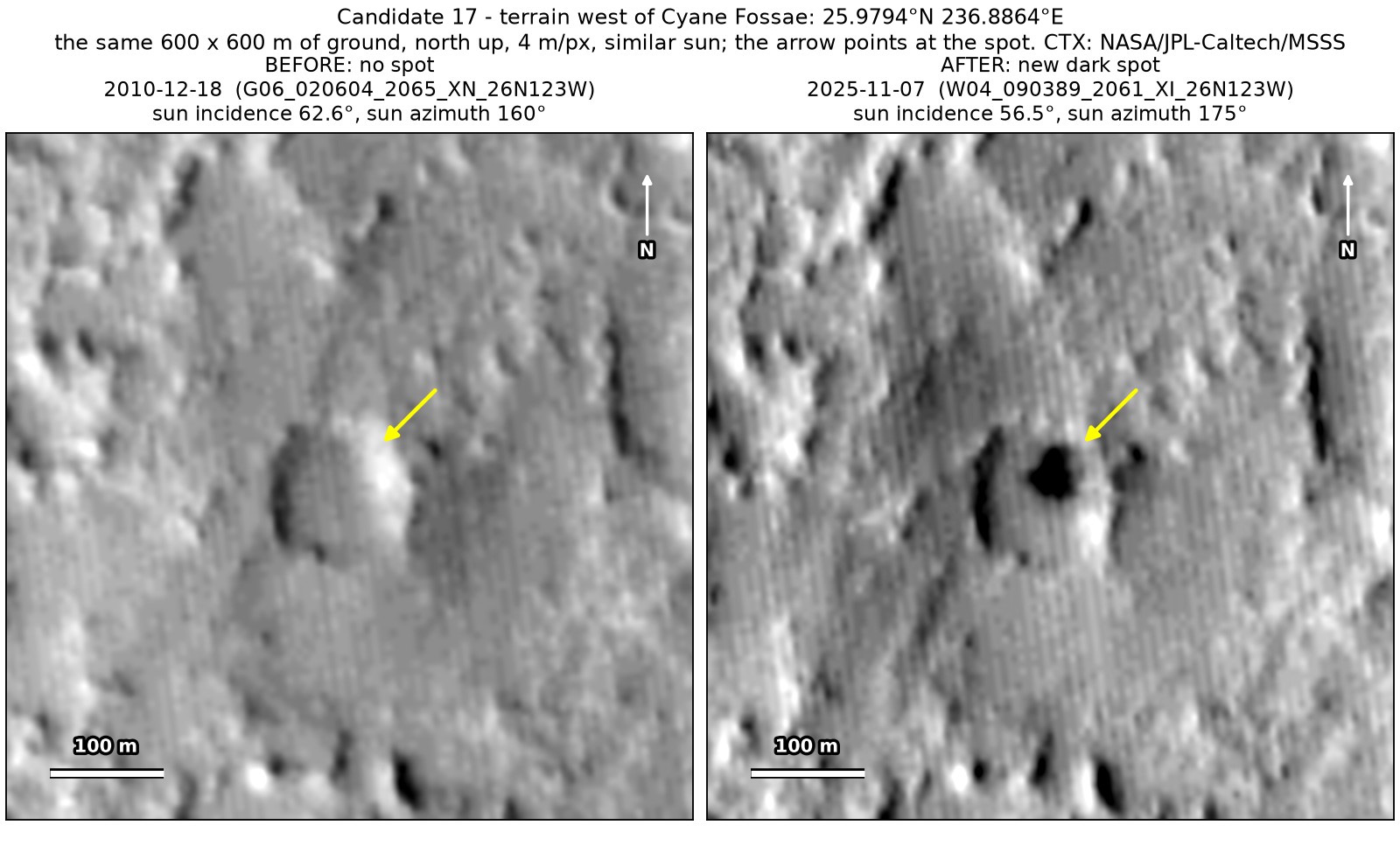
The same 600 × 600 m in December 2010 and November 2025, under a similar sun. The arrow marks the new spot. NASA/JPL-Caltech/MSSS.
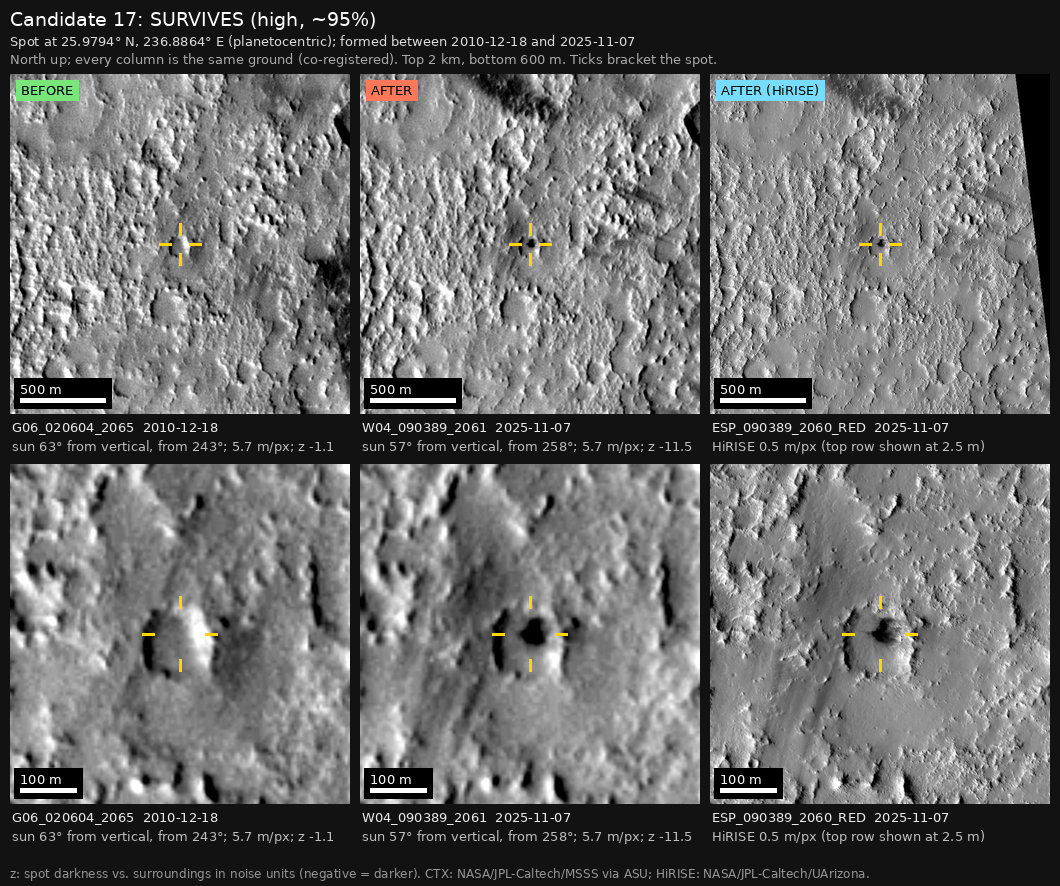
What changed. A black blob appeared inside a hollow about 100 m wide west of Cyane Fossae, some time between December 2010 and November 2025. The only earlier CTX image, from December 2010, shows sunlit ground there.
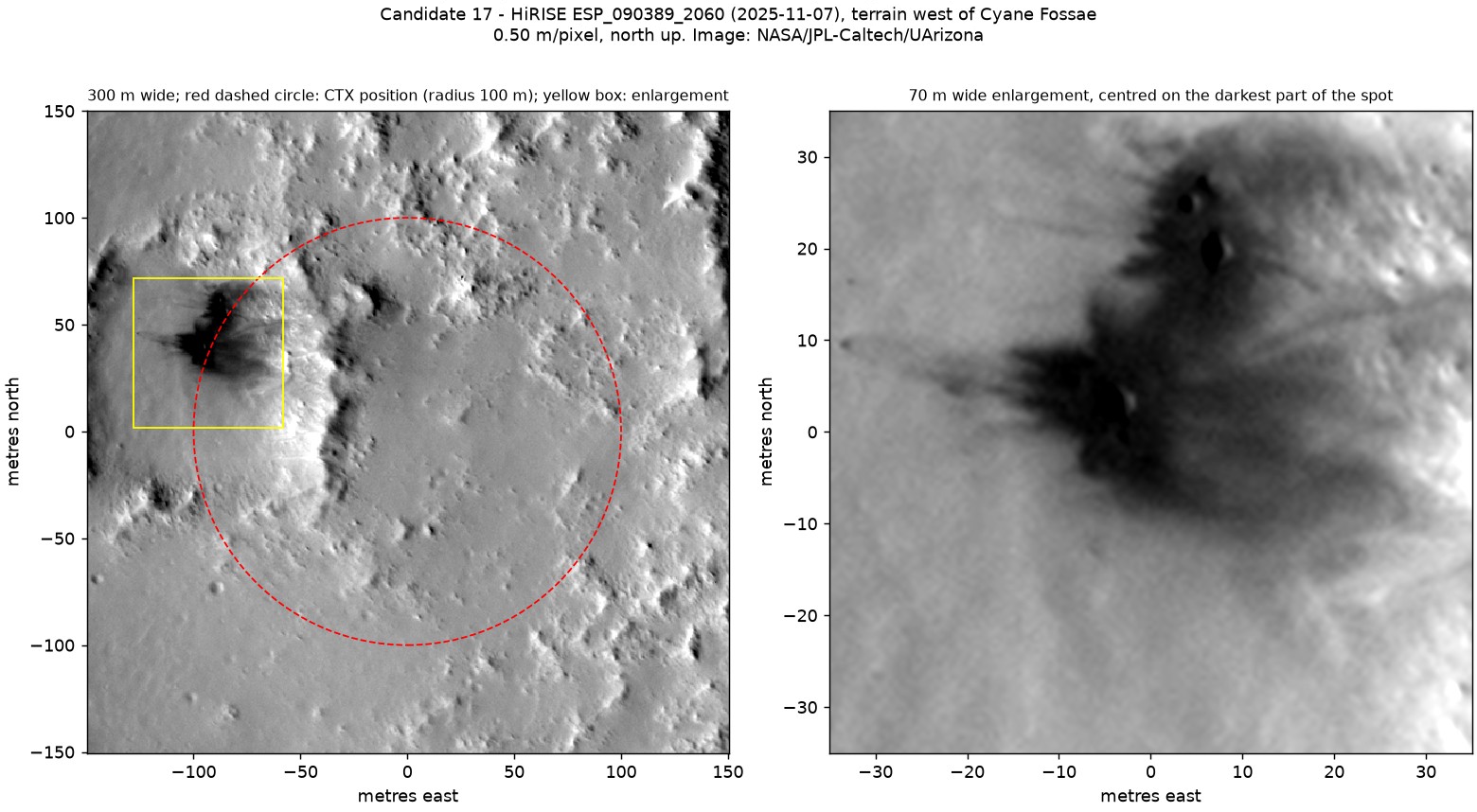
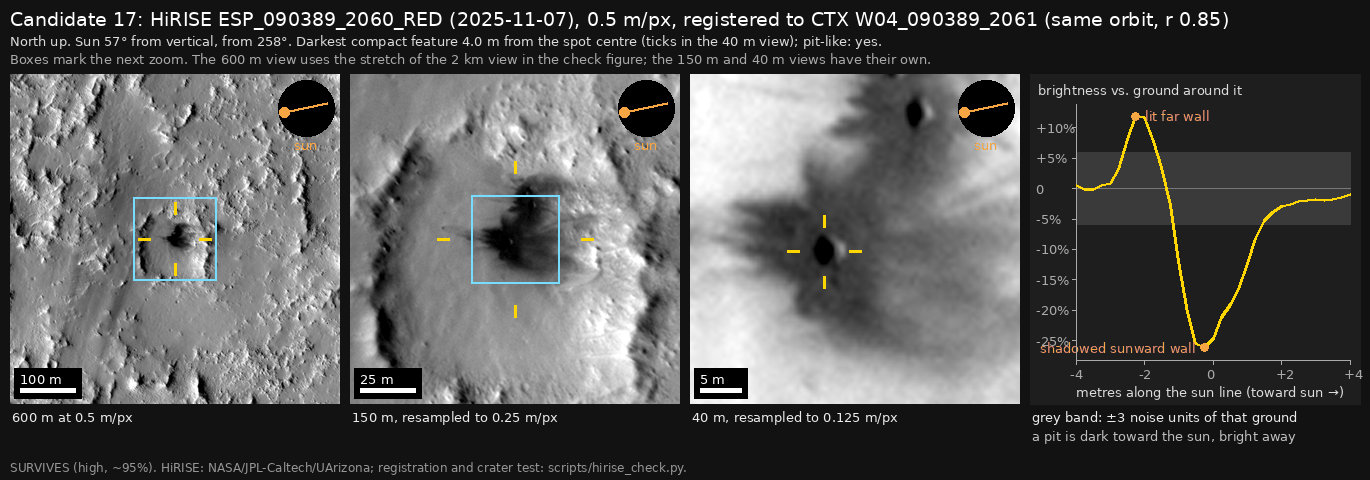
Why it may be a new impact. By chance, NASA’s HiRISE camera photographed the spot on the same orbit as the November 2025 CTX image. It shows at least three fresh pits, only 2 to 3 m across, with dark rays around them: the mark of a small meteoroid that broke apart just before it hit the ground. A dark streak on the hollow’s wall, the main look-alike, would not have pits with rays at its head.
Location
25.979° N, 236.886° E (123.114° W)
Absent
18 December 2010
Present
7 November 2025 (CTX and HiRISE)
Size
Black blob 40 to 50 m across; HiRISE shows at least three pits 2 to 3 m across inside it
Confidence
Strong candidate; roughly 95% that it is a new impact.
Caveat
Only one CTX image shows it, and none was taken between December 2010 and November 2025, so when it formed is known only to within 15 years. Like every candidate here, it is unconfirmed: see the caveat.
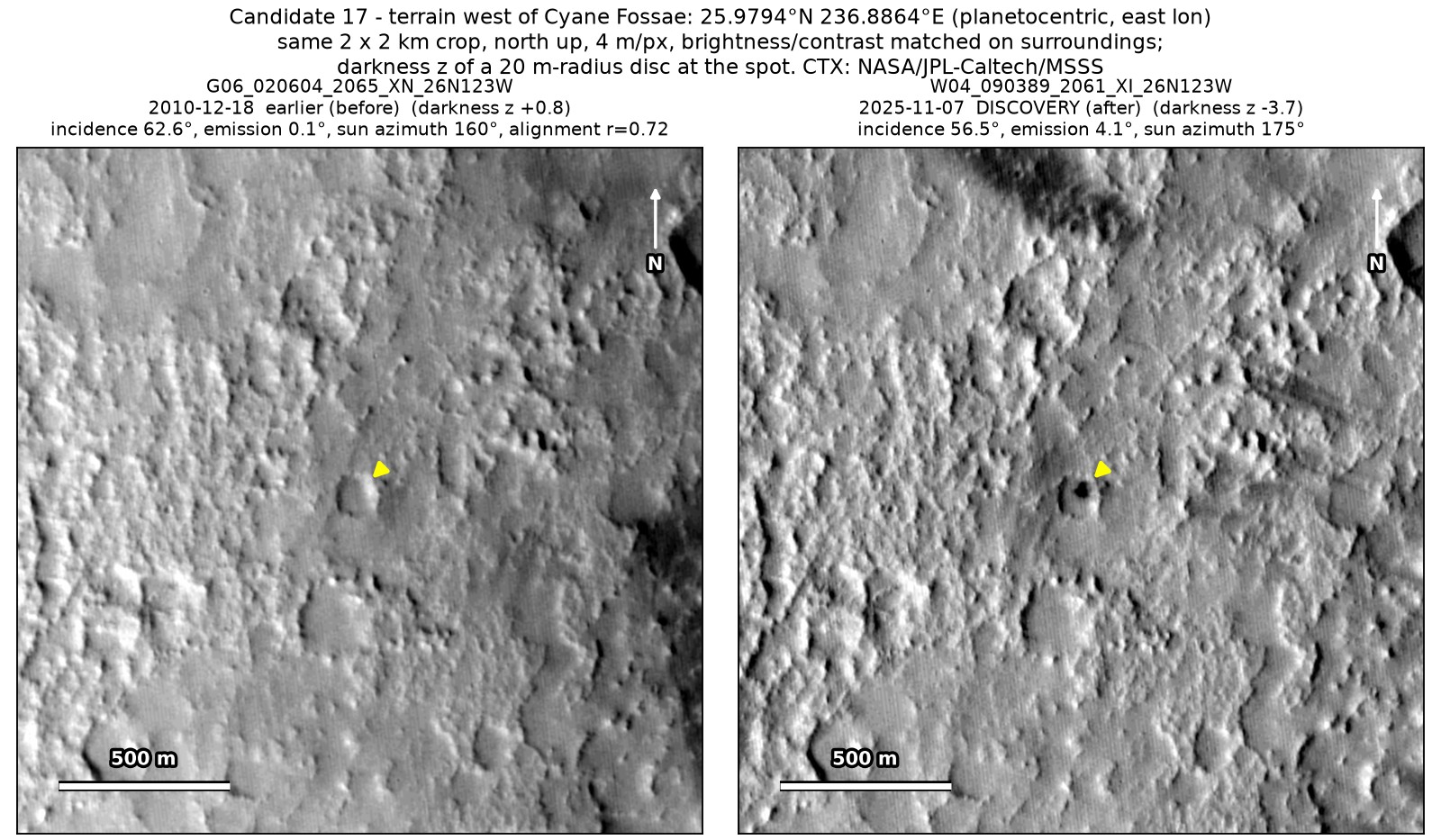
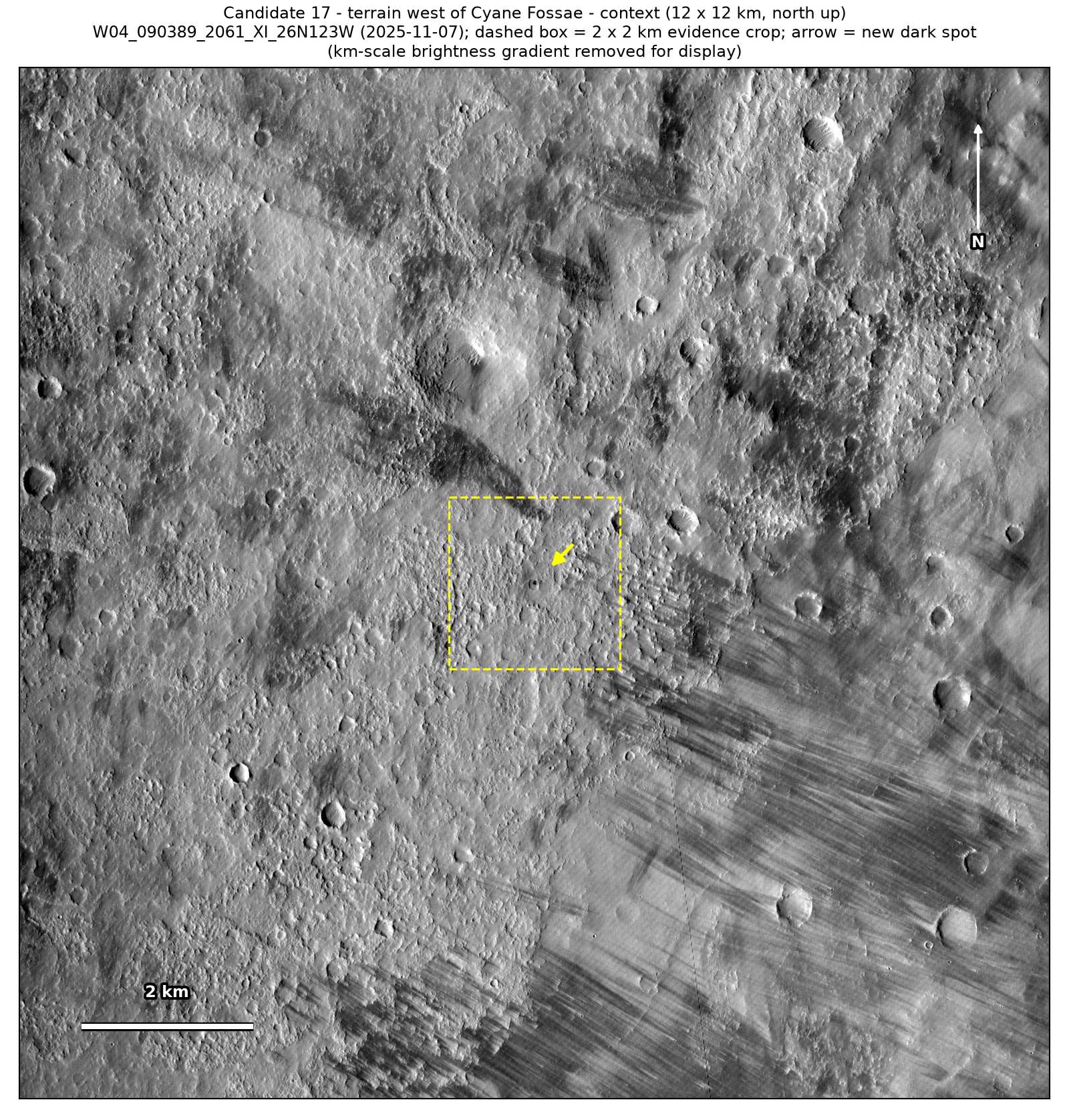
Both CTX images of the same 2 × 2 km patch, December 2010 and November 2025. NASA/JPL-Caltech/MSSS.A 12 × 12 km view from November 2025. The dashed box is the 2 × 2 km patch. NASA/JPL-Caltech/MSSS.HiRISE view of the spot (7 November 2025, 0.5 m per pixel), taken by chance on the same orbit as the CTX image, with a 70 m enlargement of its darkest part: dark rays spread from small pits. The red dashed circle marks the CTX position; the spot is at its north-west edge. NASA/JPL-Caltech/UArizona.Independent check. A second, deliberately sceptical review downloaded every image again and found that the candidate passes every test. Each column is the same ground, north up, 2 km wide above and 600 m wide below. Columns marked BEFORE are earlier images in which the spot would have been visible had it been there; those marked AFTER show it, the last in HiRISE. Each image keeps one contrast stretch in both rows, so the close-up cannot create a spot. CTX: NASA/JPL-Caltech/MSSS; HiRISE: NASA/JPL-Caltech/UArizona.The independent review’s HiRISE close-ups, 600 m, 150 m and 40 m wide, and the brightness along the sun line through the darkest point: dark on the side towards the sun and bright on the far side, the shading of a small pit rather than a boulder. NASA/JPL-Caltech/UArizona.