Professor of Mathematics
Paata Ivanisvili
Department of Mathematics, University of California, Irvine

← Possible new impact sites on Mars
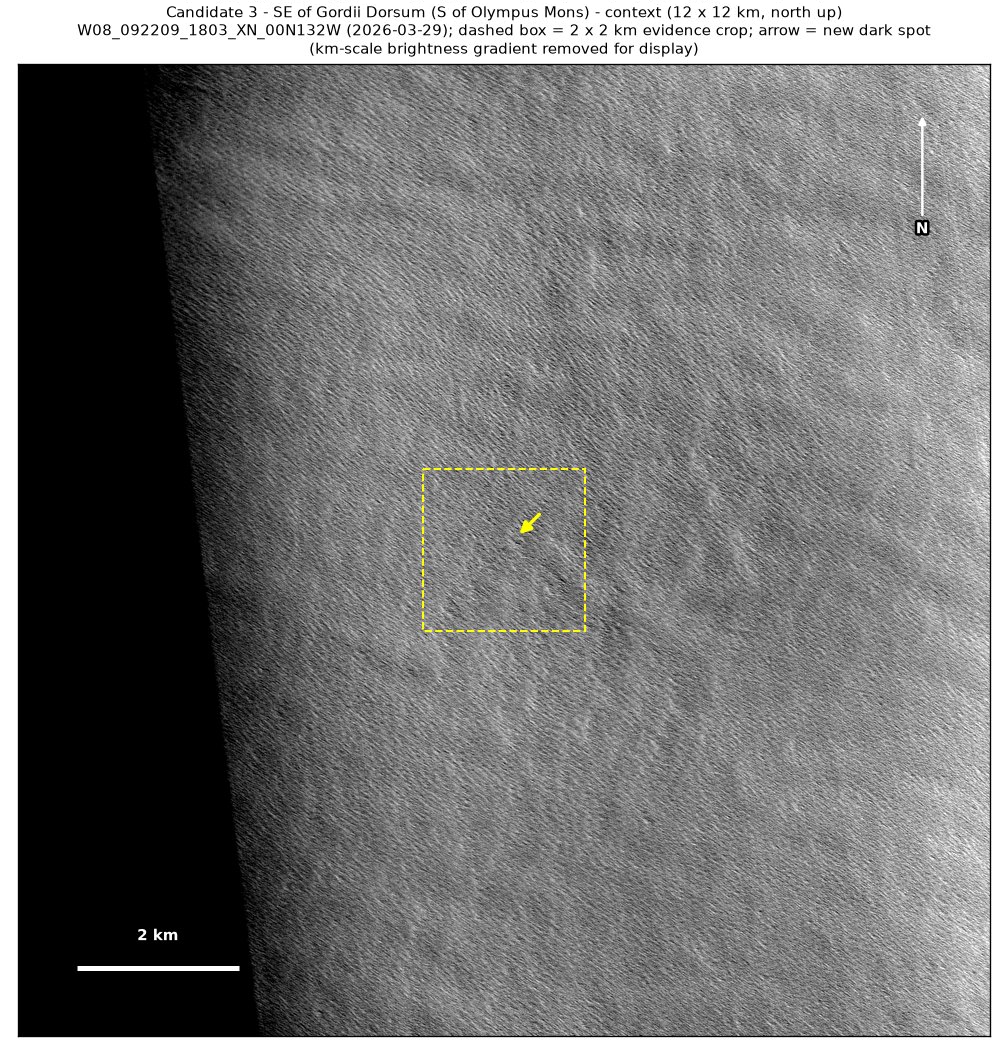
Candidate 3: South-east of Gordii Dorsum, south of Olympus Mons
Promising · roughly 55%
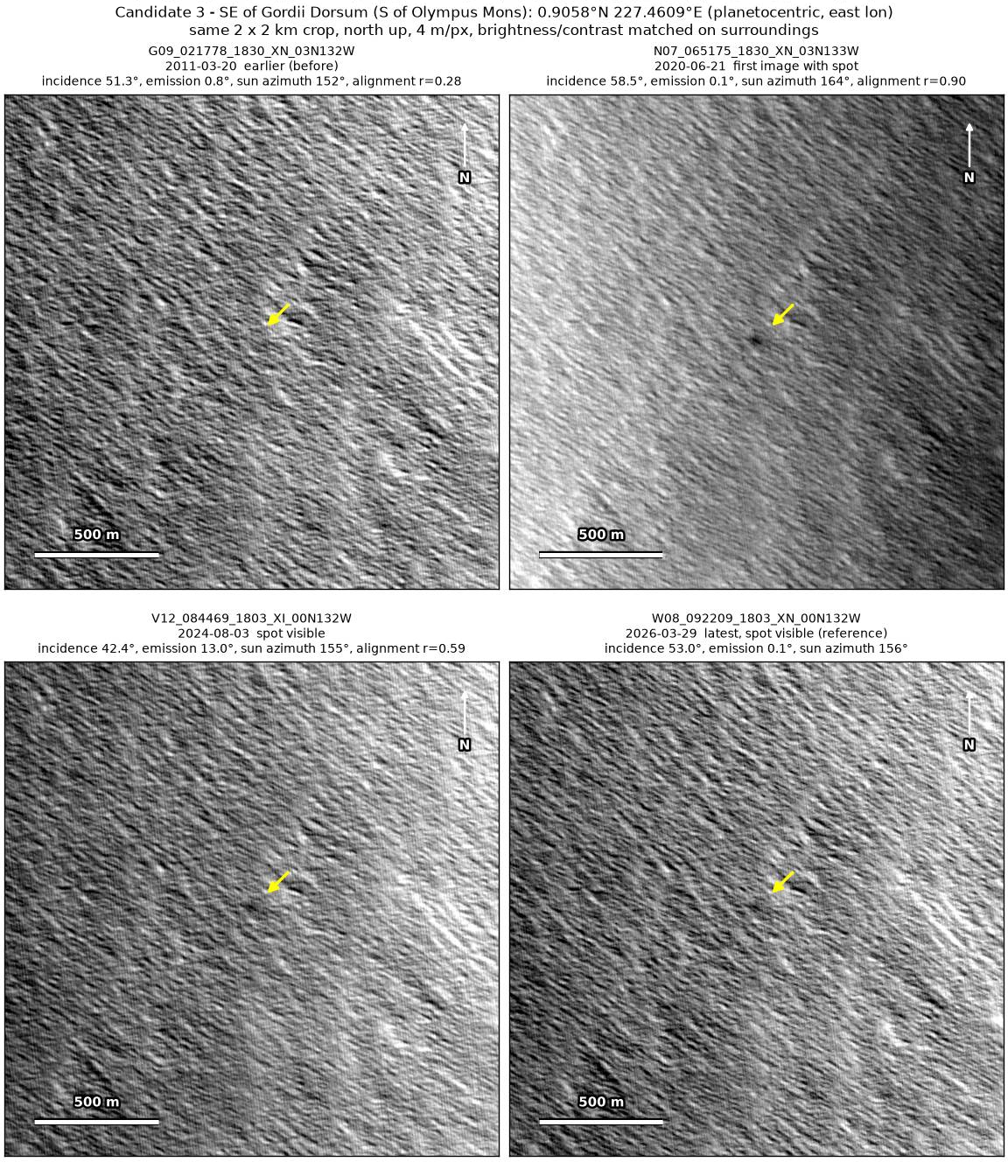
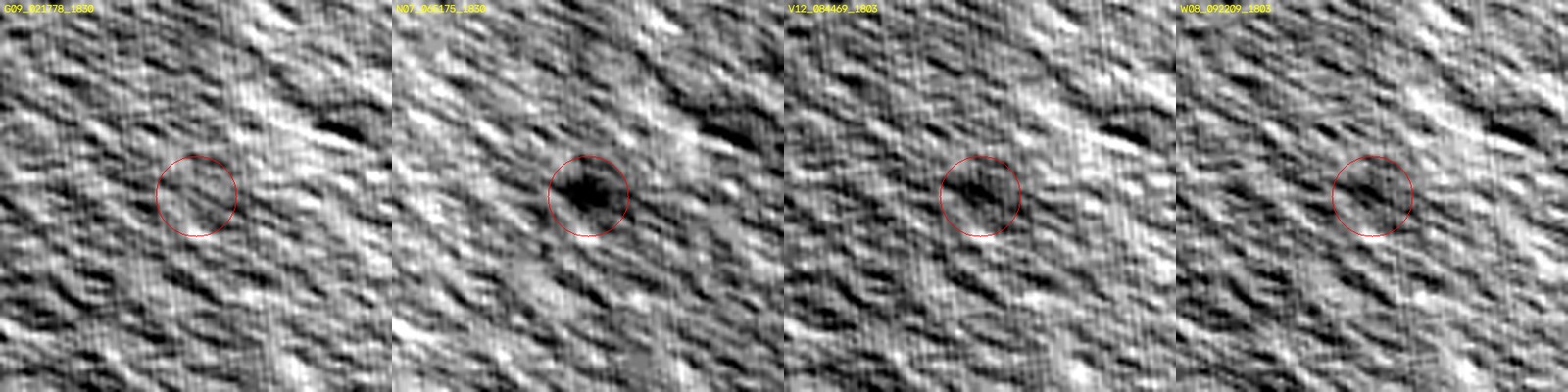
What changed. A dark spot about 40 m across appears some time between 2011 and 2020. It then fades steadily, which is how impact blast zones behave as dust settles back over them.
Why it may be a new impact. It is seen at the same place in four separate images (2020, twice in 2024, 2026), so it is not a camera glitch, and it is seen under a higher sun than the 2011 image where it is absent, so it is not a shadow.
- Location
- 0.906° N, 227.461° E
- Absent
- 20 March 2011
- Present
- 21 June 2020, then fainter in 2024 and in March 2026
- Size
- Dark spot about 40 m across
- Confidence
- Promising, roughly 55% that it is an impact.
- Caveat
- The main ordinary alternative is wind stripping dust from a small patch of this wind-carved terrain. The nearest HiRISE footprint is 38 km away and the nearest catalogued new crater is 54 km away. Like every candidate here, it is unconfirmed: see the caveat.